
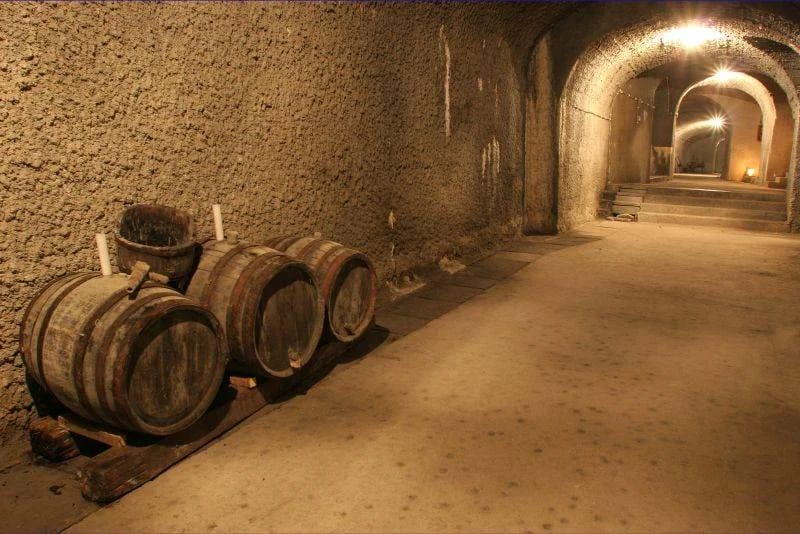
The Eger Wine Cellar System – Underground Wine Legends
Eger's 130-kilometre underground cellar system carved into tuff rock is both history and experience – where Egri Bikavér and local wine culture truly belong.
130 kilometres underground
If there's a place in Hungary where history literally runs beneath your feet, it's Eger. The city's underground world is like a medieval labyrinth — except here the Minotaur has been replaced by wine barrels. Legend has it there are so many tunnels that if you head off in the wrong direction, you can end up walking out of a completely different cellar. Not a disaster. Just an unplanned cultural wine tour.
The estimated total: 130 kilometres — one of the largest continuous, actively used cellar systems in Central Europe. The tunnels were carved into rhyolite tuff, a rock soft enough to cut easily and solid enough to hold tunnel walls in place. Tuff maintains a steady 10–12°C year-round. In summer, natural air conditioning. In winter, something close to wine-heated wellness.
Local lore has it that long ago the people of Eger hid here from the Ottomans. These days people descend to escape something more everyday — with a glass of Egri Bikavér.
The history of the cellar system – from siege to wine storage
The cellar system didn't appear overnight. In the Middle Ages, people began quarrying the tuff around Castle Hill — partly for building material (the same stone makes up the castle and many buildings in the old town), and partly for storing food and wine.
During the 1552 siege, the cellars took on a military role: food supplies, ammunition and even wounded soldiers were sheltered underground. Some of the valuables brought into the tunnels during the siege were left there afterwards — and archaeological finds have turned up during renovations ever since.
After the Ottoman period in the 17th and 18th centuries, followed by a wave of resettlement, Eger's wine production took on a more organised form. In 1774, Bishop Károly Eszterházy distributed plots in Szépasszony Valley to the city — this is when the wine-tasting valley with its famous row of cellars began to take shape. Each plot came with a cellar dug into the hillside; many of them have been in continuous use ever since.
Egri Bikavér – from legend to glass
The most famous product of the Eger cellar system is Egri Bikavér (Bull's Blood), whose name — literally "bull's blood" — itself comes from legend. One popular story holds that during the 1552 siege, the castle defenders were drinking wine, and the Ottomans, seeing their red-flushed faces, believed they were drinking bull's blood.
The reality: Bikavér is a legally regulated Eger cuvée, requiring at least three grape varieties with Kékfrankos (Blaufränkisch) as the lead. The supporting varieties typically include Cabernet Sauvignon, Cabernet Franc, Merlot, Syrah and Zweigelt — the individual cellar decides on the exact blend.
Character: a full-bodied, spicy red with pronounced acidity and a tannic structure. Young it's assertive; a few years of ageing make it smoother and more complex.
Local white wines
Alongside Bikavér, two local white wines deserve attention:
- Egri Leányka – light, fresh and fruity; usually unoaked, though some cellars age it in barrels
- Debrői Hárslevelű – a variety from nearby Debrő, with floral aromas and medium body; also made in a slightly sweeter style
Some cellars in the valley offer local specialities — Riesling, Pinot Gris or more experimental wines. It's worth asking the cellar owner.
Szépasszony Valley – where tasting happens
Szépasszony Valley lies west of Eger, a few minutes on foot. Around 30 to 40 wine cellars receive visitors during the season, typically from 10am until 8 or 10pm.
How a tasting works:
- Enter the cellar – most places need no reservation, just walk in
- What's on offer – portions of 3–6 decilitres per wine; prices vary by cellar (typically 300–800 Ft per dl)
- Cold platter – many cellars offer cheese, sausage and bread as accompaniments
- Atmosphere – the constant 10–12°C is refreshingly cool in summer and comfortable in winter
Best times to visit:
- Summer evenings: the busiest but most atmospheric time
- February–March: fewer visitors, longer conversations with the cellar owners, more intimate experience
- Autumn (October–November): post-harvest mood, chance to taste the new vintage
What kinds of cellar will you find?
The cellars vary considerably in character and style:
- Small, old cellars – low ceilings, stone floors, one or two wines; the atmosphere is the point
- More modern hospitality cellars – terrace, cold platters, bookable tasting packages
- Winery tasting rooms – where the winemaker tells you about the vintages and winemaking decisions
During a stroll through the valley it makes sense to pop into several cellars — many visitors do exactly that.
Tips for wine tasting in Eger
- Drink water between wines — cellars usually offer it, and there's no shame in asking
- Ask about the vintage — Eger wines are worth comparing across different years; the staff are happy to talk
- Don't rush — a tasting takes 45–90 minutes; rushing wastes the experience
- Stay overnight in Eger — wine tasting and driving home don't mix; walking back to the centre does
Harmónia Apartmanház provides a comfortable base close to the centre, within walking distance of Szépasszony Valley — ideal for a wine-focused weekend.
👉 Enquire about accommodation in Eger 👉 Harmónia Restaurant
The Eger cellar system is not a museum — it's a living, everyday network that anyone can enter by stepping through a cellar door. That's what sets Eger apart from other wine towns.
Stay in Eger
If you are planning this activity, explore our apartments, availability, and direct contact options.
Related content

Sights of Eger – Complete Guide to the City's Best Places
From Eger Castle to Szépasszony Valley, from the foot of the Minaret to the Lyceum observatory – we've gathered Eger's best sights so you don't miss a thing.

5 Reasons Why Eger Is the Perfect Summer Destination
Eger is a wonderful meeting point of history, wine and nature. We've collected the five best reasons to choose Eger as your travel destination this summer.
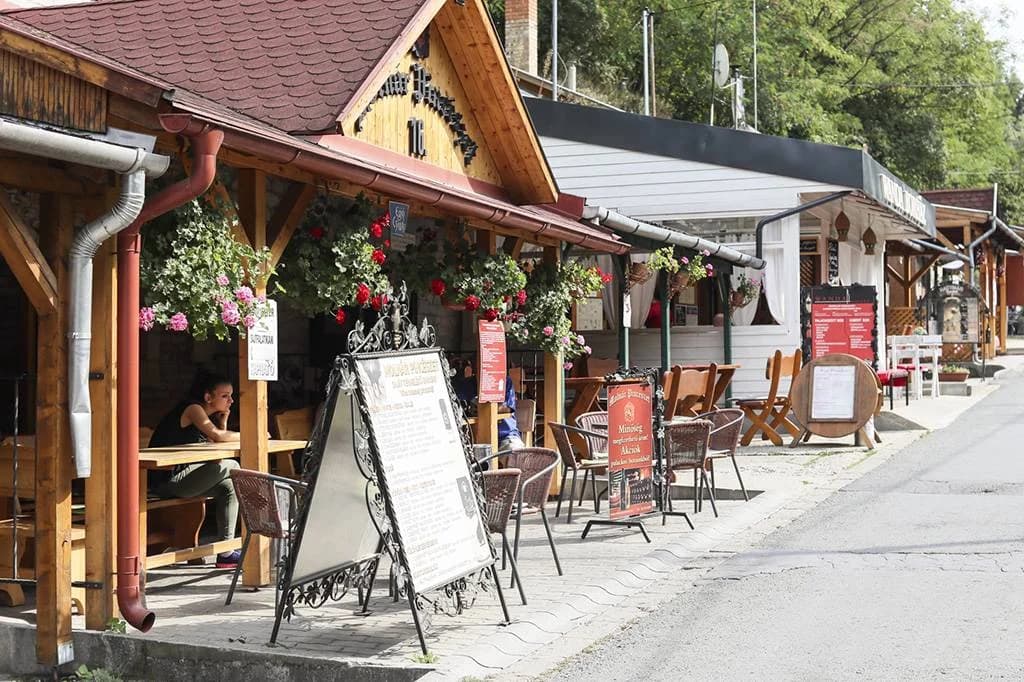
Szépasszony Valley Eger – Wine Tasting, History and 150 Cellars
Szépasszony Valley is just 10–15 minutes from the city centre – and once you're there, it's hard to leave. 150 wine cellars, Egri Bikavér, and a place whose legend stretches back centuries.